The wisdom of Citadel Securities' president Jim Esposito: "I possessed an ability to grind"
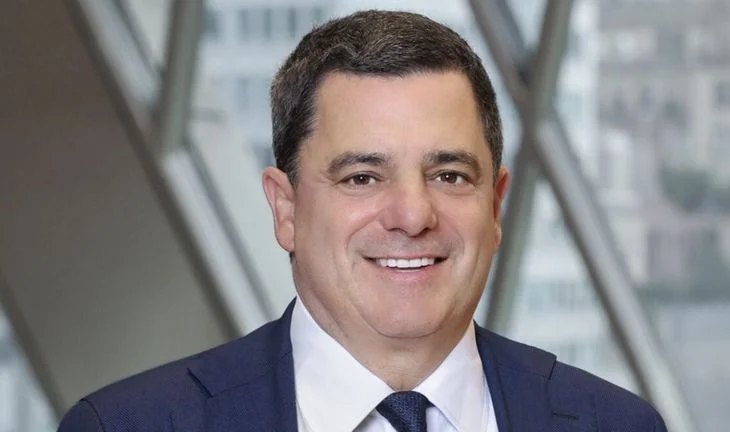
When Jim Esposito announced that he was leaving Goldman Sachs after 29 years in January 2024, he got a phone call. Ken Griffin, the founder of Citadel and Citadel Securities was on the line. Having "ripped off the Band-Aid" of his Goldman career, Esposito was planning to relax. Griffin, though, had other plans.
Get Morning Coffee ☕ in your inbox. Sign up here.
"Both Ken and Peng are incredibly convincing," said Esposito, referring to Peng Zhao, CEO of Citadel Securities. They were the "very first phone call I got," he recalls. "It was hard not to engage."
Esposito already knew Griffin from the financial crisis. In 2008, Esposito was a newly promoted Goldman Sachs partner in a role "central to liquidity and funding of financial institutions and markets," while Griffin was steering Citadel through an $8bn loss. The two men "spoke a lot" in those times, says Esposito.
And so, when Griffin and Zhao offered to make Esposito president of Citadel Securities after he announced his retirement from Goldman Sachs, Esposito jumped.
"I kind of had a checklist of things I was hoping to achieve," Esposito said in a recently released interview with students at Trinity College, Dublin. Post-Goldman, his list included an environment that was "far more entrepreneurial" [than Goldman Sachs], working for a "technology driven" firm and being surrounded by "dynamic, brilliant people."
Citadel Securities, which only employs 1,700 people but which trades nearly 25% of US equities by volume using an electronic platform, matched all his criteria. Founded in 2002, Citadel Securities isn't "burdened by a legacy technology stack," says Esposito. Plus, there was the opportunity to work with Ken, whom Esposito says lavishly is a "once in a generation talent" and "literally the greatest financial mind of our generation." Even after nearly three decades at Goldman, Esposito says Ken's approach is "like nothing I've ever seen before."
It sounds pretty special, but how do you move from Goldman Sachs partner to running one of the world's premier electronic trading platforms? Esposito, who is interested in the "human condition" and who likes reading novels, is known for being personable. Equally though, he says he knows how to grind.
"I possessed an ability to grind, and I thought grinding was an important skill in one's career," says Esposito. "You're going to make countless mistakes, you're going to get knocked down. you're going to get marked to market in a way that you're not happy about." You need to be able to get through this.
Esposito started out in the ultimate of grinding jobs as an analyst in M&A before switching to fixed income at Salomon Brothers. Three years into his career at Salomon, though, he was burned out. He opted to study an MBA at Dartmouth College, as much for a rest and sense of perspective as anything else. "I wasn't yet ready to fully commit to the idea of working full-time in that environment," he says. "The MBA allowed me a chance to you know, look around to make sure there weren't other industries and other roles that I might have wanted to do."
There weren't other roles and industries. Esposito finished his MBA and he joined Goldman Sachs, and there he stayed until 2024.
Esposito isn't a quant. His first degree was in economics and political science. And yet, Citadel Securities employs 300 PhDs and thrives on the basis of its quantitative research. Alongside the grinding, Esposito says he brings leadership skills to the firm. - He understands how to get people "excited" and "marching in the same direction" to build "something better."
What if you want Esposito to hire you? You'll need EQ. You'll need to be a grinder. You'll need to have an ability to learn from "hard feedback." Esposito says the first years of his own career were "not a pretty picture" but that he evolved partly through ingesting such feedback and partly through mentors, some of whom he approached after town halls.
Will Citadel Securities need more people like him in the future? Esposito isn't saying. But he says that irrespective of AI, Citadel Securities will always need quant researchers. He says you need brilliant minds to "think around corners" and to "understand that even though that event hasn't happened in 50 years and isn't in the sample set of data" that the AI is trained from, it's still a very real possibility nonetheless.
Have a confidential story, tip, or comment you’d like to share? Contact: +44 7537 182250 (SMS, WhatsApp or voicemail). Telegram: @SarahButcher. Click here to fill in our anonymous form, or email editortips@efinancialcareers.com. Signal also available.
Bear with us if you leave a comment at the bottom of this article: all our comments are moderated by human beings. Sometimes these humans might be asleep, or away from their desks, so it may take a while for your comment to appear. Eventually it will – unless it’s offensive or libellous (in which case it won’t.)